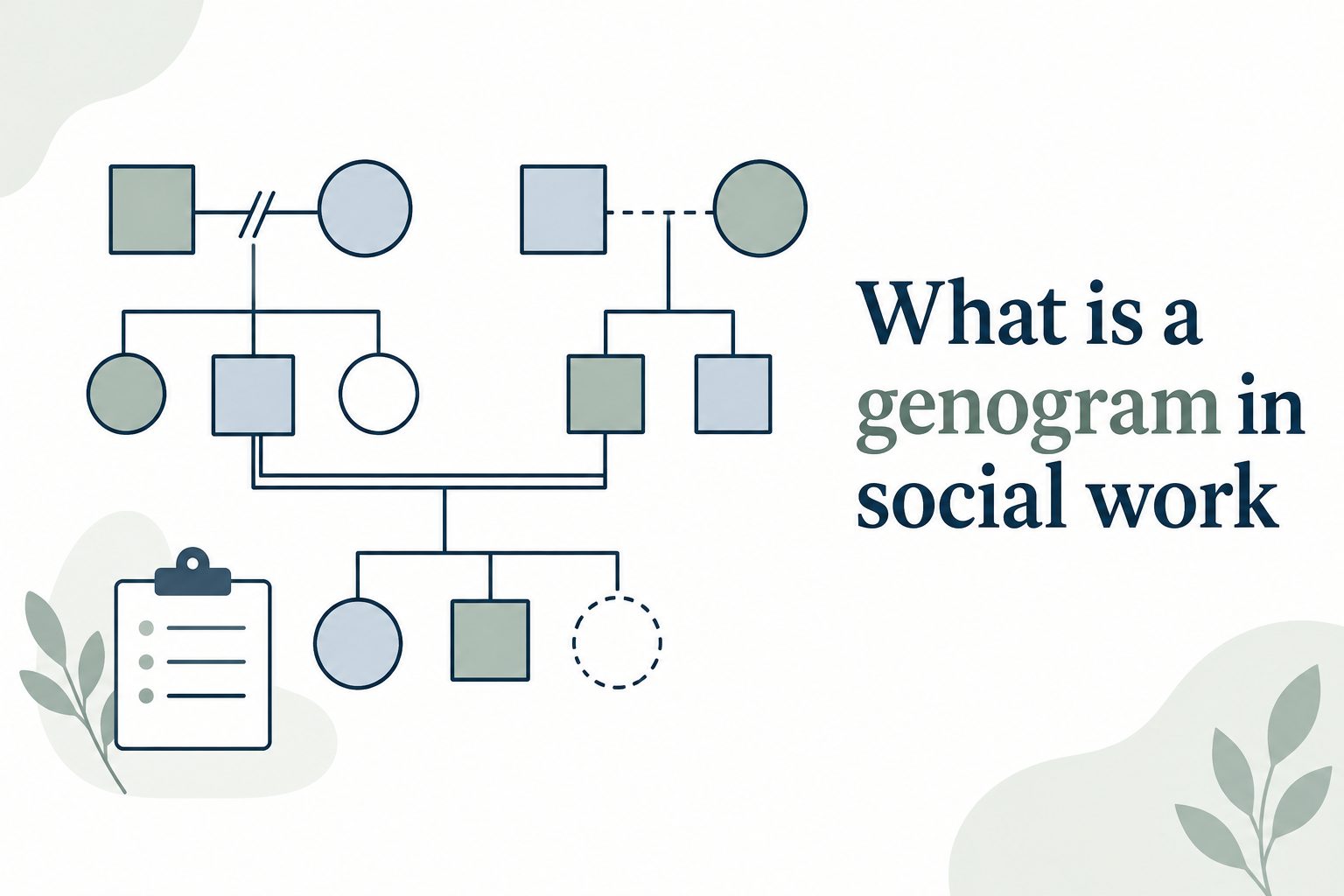
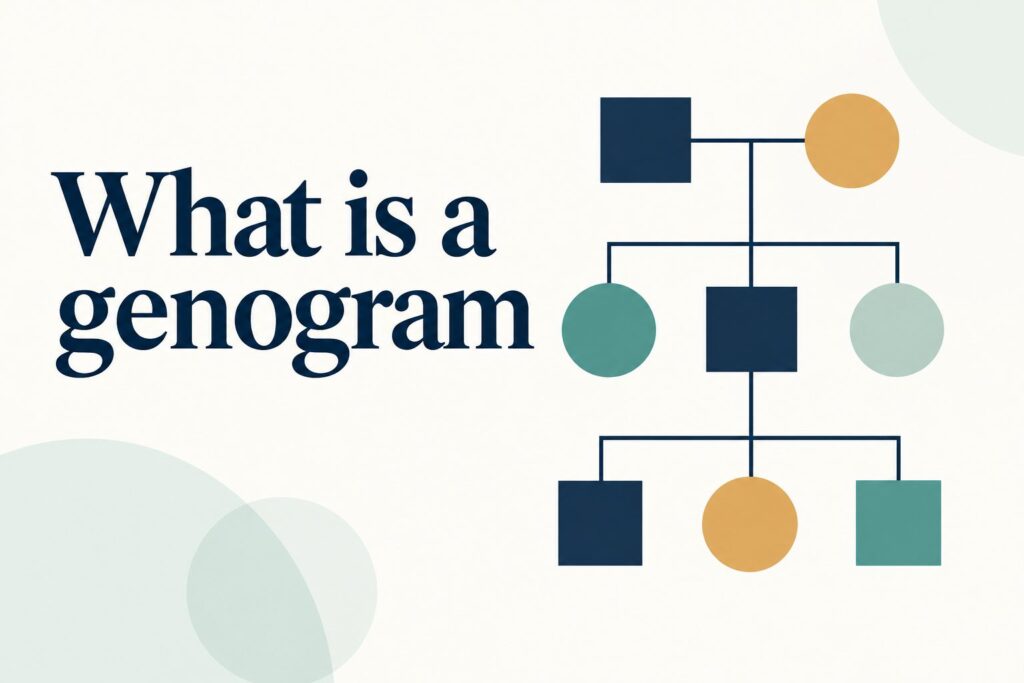
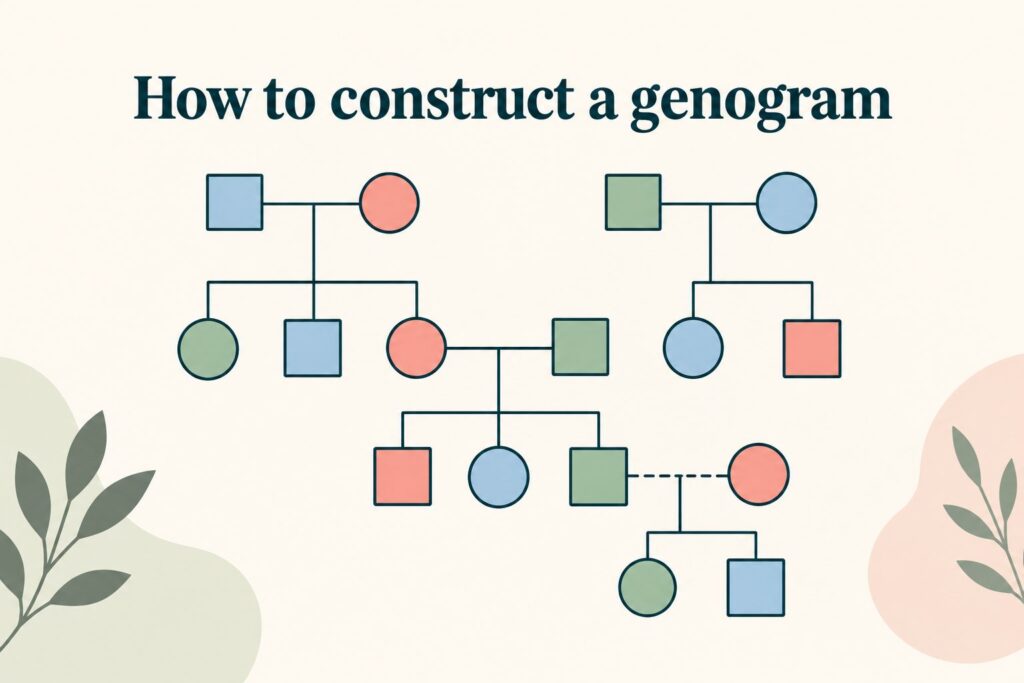
A genogram in social work is a visual map of a person’s family relationships, history, and recurring patterns across several generations. It looks more detailed than a basic family tree because it can show emotional connections, major life events, health concerns, caregiving roles, conflict, separation, loss, and support systems. Social workers use genograms to see the wider family context behind a client’s current situation. Rather than focusing only on one problem, the tool helps reveal how family experiences may influence wellbeing, behavior, safety, and relationships. This article explains what a genogram is, why it matters in social work, how professionals create and use one, common symbols and patterns, practical examples, ethical concerns, and answers to common questions.
What A Genogram Shows In Social Work
A genogram organizes family information in a clear visual format. It gives social workers a fuller picture of the people, experiences, and relationships surrounding a client.
1. Family Structure Across Generations
A genogram usually includes at least three generations, such as grandparents, parents, children, siblings, and significant caregivers. It records marriages, partnerships, separations, divorces, adoptions, stepfamily relationships, and deaths. This structure helps a social worker identify who belongs to the client’s family network and how family roles may have changed over time.
2. Emotional Relationship Patterns
Unlike a simple family tree, a genogram can describe the quality of relationships. It may show closeness, distance, conflict, cut-off contact, dependency, or unreliable support. These patterns can help explain why a client turns to certain relatives for help, avoids others, or feels caught between competing family expectations.
3. Significant Life Events
Social workers may note events such as bereavement, migration, unemployment, incarceration, illness, divorce, domestic abuse, substance use, or child protection involvement. Seeing events together can reveal timing and possible effects on the family. The purpose is not to judge relatives, but to understand experiences that may shape present needs.
4. Health And Mental Health History
A genogram can include relevant physical health, mental health, disability, addiction, and trauma history when this information is appropriate to the assessment. Repeated concerns across generations may suggest areas for sensitive exploration. They do not prove that a client will have the same experience, and they should never be treated as a diagnosis.
5. Cultural And Social Context
Family life is shaped by culture, faith, language, community, identity, and social conditions. A genogram can record migration history, cultural traditions, military service, foster care experiences, or major social pressures. This context helps the social worker avoid narrow assumptions and recognize both the strengths and challenges within a family system.
6. Sources Of Support And Stress
The visual map can show who provides practical help, emotional encouragement, housing, childcare, money, or advocacy. It can also show where stress is concentrated. This gives the worker a practical starting point for planning, because helpful people and strained relationships may both affect what support is realistic for the client.
Why Genograms Matter In Social Work
Genograms help social work assessments move beyond isolated facts. They make it easier to connect individual experiences with family relationships, resources, and long-term patterns.
1. They Promote A Whole-Person Assessment
Clients do not live separately from their family histories and relationships. A genogram helps workers consider the wider system around a person, including care responsibilities, losses, conflict, and support. This can lead to a more balanced assessment that recognizes strengths as well as risks and avoids reducing someone to a single problem.
2. They Reveal Repeating Family Patterns
Repeated experiences may become clearer when several generations are viewed together. For example, early parenthood, family estrangement, caregiving burdens, addiction, or unstable housing may appear more than once. Recognizing a pattern can guide respectful questions, but it should never lead to blame or the assumption that the pattern cannot change.
3. They Improve Communication With Clients
Creating a genogram together can give clients a structured way to tell their story. Some people find it easier to talk about complex family relationships when they can see them represented visually. The process can also correct misunderstandings, highlight important relationships, and help the client decide what information feels relevant to share.
4. They Support Better Care Planning
A good support plan needs to reflect the client’s actual circumstances. A genogram may identify a trusted aunt, an estranged parent, a sibling providing care, or a family member creating stress. This helps social workers plan with real relationships in mind instead of suggesting support that is unavailable or unsafe.
5. They Help Identify Protective Factors
Genograms are not only tools for finding difficulties. They can reveal resilience, loyalty, cultural continuity, supportive relatives, recovery stories, and people who have helped the family through hardship. Identifying these protective factors encourages strengths-based practice and reminds clients that their family history may include valuable resources alongside challenges.
6. They Encourage Reflective Practice
When social workers review a genogram, they can notice gaps in their own knowledge and assumptions. They may realize they have focused too heavily on one relationship or overlooked a key caregiver. Used thoughtfully, the tool supports curiosity, reflection, and more careful decision-making throughout assessment and intervention.
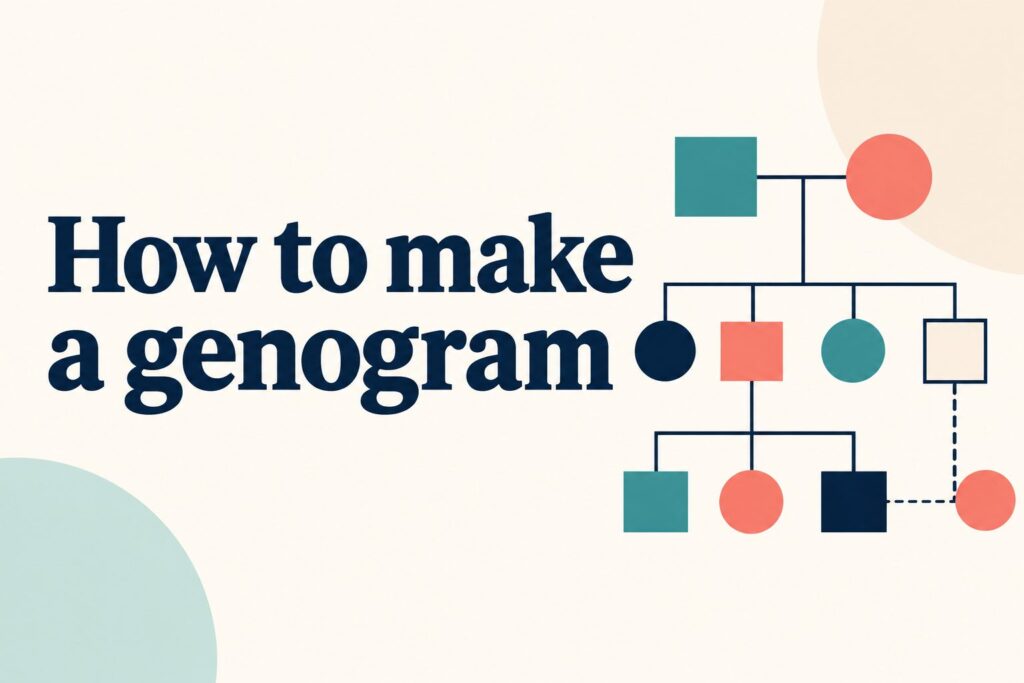
How Social Workers Create A Genogram
The process should be collaborative, paced carefully, and guided by the purpose of the assessment. A genogram is most useful when the client understands why information is being discussed.
1. Explain The Purpose Clearly
Before gathering family information, the social worker should explain what a genogram is and how it may be used. Clients should know that they can ask questions, correct details, or decline to discuss certain areas. Clear consent builds trust and helps prevent the activity from feeling intrusive or like an investigation.
2. Start With The Client’s View Of Family
Workers should not assume that family means only biological relatives. Ask who the client considers family, including step-relatives, chosen family, former carers, friends, or community members. Starting with the client’s own definition produces a more accurate map and respects different family structures, cultures, and lived experiences.
3. Gather Basic Relationship Information
Begin with names or initials, approximate ages, gender identities where relevant, partnerships, children, and major caregiving arrangements. It is often helpful to work one generation at a time. Keeping the early stage simple prevents the map from becoming overwhelming and allows the client to guide the pace.
4. Add Relevant History And Events
Once the basic structure is clear, add important events connected to the assessment. These may include bereavements, separations, moves, health concerns, work changes, or involvement with services. Only include information that has a clear purpose; a genogram should not become a collection of unnecessary private details.
5. Explore Relationship Quality Carefully
Ask open questions about contact, support, conflict, and boundaries rather than assigning labels too quickly. For example, a client may have limited contact with a parent but still value that relationship. Recording the client’s perspective and acknowledging that relationships can change helps keep the genogram accurate and respectful.
6. Review The Map Together
At the end, review the genogram with the client. Ask what stands out, what feels incomplete, and whether any part needs correcting. This shared review can create useful insight while also reinforcing the client’s ownership of their story. The worker should document interpretations separately from confirmed facts.
Common Genogram Symbols And Patterns
Although symbols may vary by agency or training model, consistency matters. The map should be easy enough for the worker and client to interpret without losing important meaning.
1. People And Gender Symbols
Traditional genograms often use shapes to represent people and lines to show relationships. Modern practice should be inclusive and flexible, especially when recording gender identity and family roles. The symbol system matters less than clarity, respectful language, and a shared explanation of what each mark represents in that particular genogram.
2. Partnership And Separation Lines
Lines between adults may show marriage, long-term partnership, separation, divorce, or other relationship arrangements. These details can be important when a worker is considering caregiving, contact, housing, or decision-making. However, the diagram should not imply that one family arrangement is more valid or stable than another.
3. Parent-Child Connections
Vertical lines often show parent-child relationships, while special markings can indicate adoption, fostering, guardianship, or stepfamily connections. Social workers should clarify legal, emotional, and practical caregiving roles separately. A biological connection does not always mean a person is involved, safe, or central in the client’s everyday life.
4. Close Or Supportive Relationships
A genogram may show strong, close, or supportive connections through agreed symbols or notes. These relationships can be vital when planning intervention, especially during crisis, transition, or caregiving stress. Workers should still ask what support looks like in practice, because emotional closeness does not always mean practical availability.
5. Conflict And Cut-Off Relationships
Conflict, hostility, distance, and no-contact relationships may also be represented. These labels need care because they reflect a moment in time and one person’s account. Rather than treating them as permanent facts, social workers should record context, explore safety concerns, and avoid pressuring clients to reconnect with harmful relatives.
6. Repeated Themes Across Generations
The value of a genogram often comes from seeing themes together. A worker may notice repeated caregiving roles, bereavements at similar ages, substance misuse, or migration-related separation. These observations should be offered gently as possibilities for reflection, not as fixed explanations for a client’s behavior or future.
Practical Uses Of Genograms In Social Work
Genograms can be adapted for many settings. Their use should always match the client’s goals, the service context, and the worker’s professional responsibilities.
1. Child And Family Assessments
In child and family work, a genogram can clarify who cares for a child, who has contact, and where support or risk may exist. It can help workers identify relatives who may contribute to safe planning. It should be combined with direct assessment of the child’s wishes, safety, and daily experience.
2. Adult Mental Health Support
For adults receiving mental health support, a genogram can explore family responses to distress, patterns of care, and available support. It may reveal isolation or pressure within relationships. The worker should avoid implying that family alone caused mental health difficulties, since wellbeing is influenced by many personal and social factors.
3. Older Adult Care Planning
When supporting older adults, social workers can use genograms to map informal carers, family tensions, bereavement, and changing responsibilities. This is useful when discussing care arrangements or preventing carer burnout. It also helps ensure that assumptions are not made about which relatives are willing, able, or safe to provide care.
4. Domestic Abuse And Safety Work
A genogram may help identify patterns of control, isolation, intergenerational trauma, and supportive contacts in domestic abuse work. Safety must come first. Workers should never create or share a detailed family map in a way that could expose a client, reveal their location, or increase risk from an abusive person.
5. Substance Use And Recovery Services
In substance use services, genograms can help clients explore family beliefs about alcohol or drugs, recovery supports, loss, and relationship strain. The map should not label an entire family as dysfunctional. Instead, it can support conversations about boundaries, relapse prevention, trusted contacts, and the client’s own recovery goals.
6. School And Community Social Work
School and community social workers may use a genogram to understand a young person’s support network, family transitions, and key adults. It can guide practical communication and referrals. The worker should be especially careful with confidentiality, since a young person may not want sensitive family information shared beyond the assessment context.
Common Genogram Mistakes To Avoid
A genogram is helpful only when it is accurate, respectful, and connected to a clear purpose. These common mistakes can reduce trust or lead to poor conclusions.
1. Treating The Map As The Whole Story
A genogram summarizes information; it does not capture every feeling, event, or perspective. Workers should avoid making major judgments based on lines and symbols alone. Use the map as a starting point for conversation, then combine it with observation, professional assessment, and the client’s own explanation of their circumstances.
2. Collecting More Information Than Needed
Detailed family information can be sensitive. Gathering facts simply because they might be interesting can feel invasive and create unnecessary privacy risks. Social workers should ask only for information relevant to the agreed purpose, explain why it matters, and review whether each detail needs to be recorded in the case file.
3. Assuming Family Roles From Biology
Biological relationships do not automatically show who provides care, trust, safety, or support. A parent may be absent, while a grandparent, neighbor, or chosen family member is central. Ask about lived relationships and daily responsibilities rather than relying on traditional assumptions about family structure, gender, or household roles.
4. Ignoring Strengths And Resilience
Some genograms focus so heavily on illness, conflict, and loss that they create a negative picture of the family. This can feel blaming and miss important resources. Include supportive relationships, achievements, cultural strengths, recovery, and coping strategies so the assessment remains balanced and useful for planning.
5. Using Labels Without Context
Words such as conflictual, distant, or enmeshed can oversimplify a complex relationship. If labels are used, they should reflect the client’s account and include enough context to be meaningful. A relationship may be difficult because of safety concerns, grief, distance, poverty, or unresolved events rather than simple dislike.
6. Failing To Update The Genogram
Families change through births, deaths, moves, reconciliation, separation, and changing care arrangements. An old genogram can quickly become misleading if it is treated as current. Review it during key transitions and update relevant information, while keeping a clear record of when the map was created and what it represents.
Best Practices For Using Genograms
Effective genogram practice balances curiosity with sensitivity. The goal is to support the client’s understanding and planning, not to produce a perfect diagram.
1. Keep The Client In Control
Invite clients to decide how much they want to share and when. They may need breaks, may not know every detail, or may prefer not to discuss certain relatives. Respecting these choices helps maintain trust and recognizes that family history can involve grief, trauma, shame, or safety concerns.
2. Use Plain And Respectful Language
Explain symbols and questions in everyday language. Avoid clinical terms that may sound judgmental or confusing. When documenting the genogram, distinguish between direct facts, the client’s views, and the worker’s observations. This supports accuracy and reduces the risk that an interpretation becomes recorded as unquestioned truth.
3. Be Culturally Responsive
Family systems differ across cultures, communities, and households. Extended kin, elders, godparents, chosen family, and community members may have major caregiving roles. Ask rather than assume. A culturally responsive genogram makes room for the relationships that matter to the client instead of forcing their experience into a narrow template.
4. Protect Confidential Information
Information about relatives is often private and may include allegations, health concerns, or sensitive history. Store records according to agency policy and discuss limits on confidentiality when needed. Do not share a genogram casually with other professionals or family members without a clear legal, ethical, and practice-based reason.
5. Connect Insights To Action
A genogram should lead to meaningful next steps. If it identifies a supportive person, consider whether that person can safely be involved with consent. If it highlights isolation or conflict, explore support options. The map is most valuable when it helps the client and worker make practical, realistic decisions together.
6. Seek Supervision For Complex Cases
Cases involving trauma, domestic abuse, child protection, disputed information, or intense family conflict may require supervision. A supervisor can help the worker test assumptions, manage emotional responses, and decide what information is necessary. This protects both the client and the quality of professional decision-making.
Benefits Of A Social Work Genogram
When used well, a genogram offers several practical benefits for clients and professionals.
- Clearer Family Picture: It makes complex relationships easier to see than written notes alone.
- Stronger Client Voice: Clients can describe family life in their own terms and correct assumptions.
- Better Risk Awareness: It can highlight relevant safety concerns, changes, and gaps in support.
- Strengths-Based Planning: It identifies trusted people, coping resources, and meaningful connections.
- More Focused Questions: Workers can explore patterns carefully instead of asking broad, unfocused questions.
- Improved Continuity: A clear, updated map can help professionals understand important family context over time.
Genograms And Family Trees Compared
A family tree mainly records who is related to whom. It can be useful for showing ancestry, names, and generations, but it usually says little about everyday relationships or major family experiences.
A genogram includes family structure while adding emotional connections, significant events, health information, caregiving patterns, and social context. It is therefore more useful for assessment and support planning in social work.
Neither tool should replace conversation. A diagram can organize information, but it cannot fully show how a client feels about a relationship or what they want to happen next.
The best choice depends on purpose. A simple family tree may be enough for a basic history, while a genogram is more appropriate when family dynamics affect wellbeing, safety, care, or decision-making.
In practice, many social workers begin with a simple family map and add genogram details only when they are relevant, consented to, and helpful for the client’s goals.
Frequently Asked Questions
1. How Many Generations Should A Genogram Include
Most social work genograms include three generations because this often provides enough context to notice family roles and recurring patterns. However, the right scope depends on the assessment purpose. A shorter map may be appropriate when time is limited, while a wider history may help with complex family or caregiving situations.
2. Can A Client Refuse To Complete A Genogram
Yes. A client can decline to create a genogram or choose not to discuss specific people and events. Social workers should explain its purpose, seek meaningful consent, and respect boundaries. The tool should support the client’s participation, not become a requirement that causes distress or undermines trust.
3. Is A Genogram Only Used With Families
No. Although it maps family relationships, a genogram can be useful with individuals, couples, children, older adults, and people who define family in nontraditional ways. It can include chosen family, important friends, carers, and community members when those relationships are meaningful to the client’s situation.
4. Does A Genogram Diagnose Mental Health Problems
No. A genogram is not a diagnostic tool. It may show relevant health history or patterns that deserve sensitive discussion, but it cannot establish a diagnosis or predict someone’s future. Social workers should use it alongside appropriate assessment, professional consultation, and the client’s own account of their wellbeing.
5. What Is The Difference Between A Genogram And An Ecomap
A genogram focuses mainly on relationships and patterns within a family or kinship network across generations. An ecomap focuses more broadly on a person’s connections with external systems, such as school, work, healthcare, friends, faith groups, and community services. Both can be useful in social work assessment.
6. Should Genograms Be Included In Case Records
They may be included when they are relevant to the assessment and stored according to organizational policy. Because they can contain sensitive information about several people, workers should record only necessary details, date the document, protect confidentiality, and update it when material changes affect planning or safety.
Conclusion
A genogram in social work is a detailed family map that helps professionals and clients explore relationships, history, support, stress, and patterns across generations. It can improve assessment, strengthen care planning, and reveal both risks and protective factors when used with care.
The most effective genograms are collaborative, culturally responsive, confidential, and connected to a clear purpose. They should never replace the client’s voice or professional judgment. Instead, they provide a practical way to see the wider family story behind a person’s current needs and goals.
Discussion