
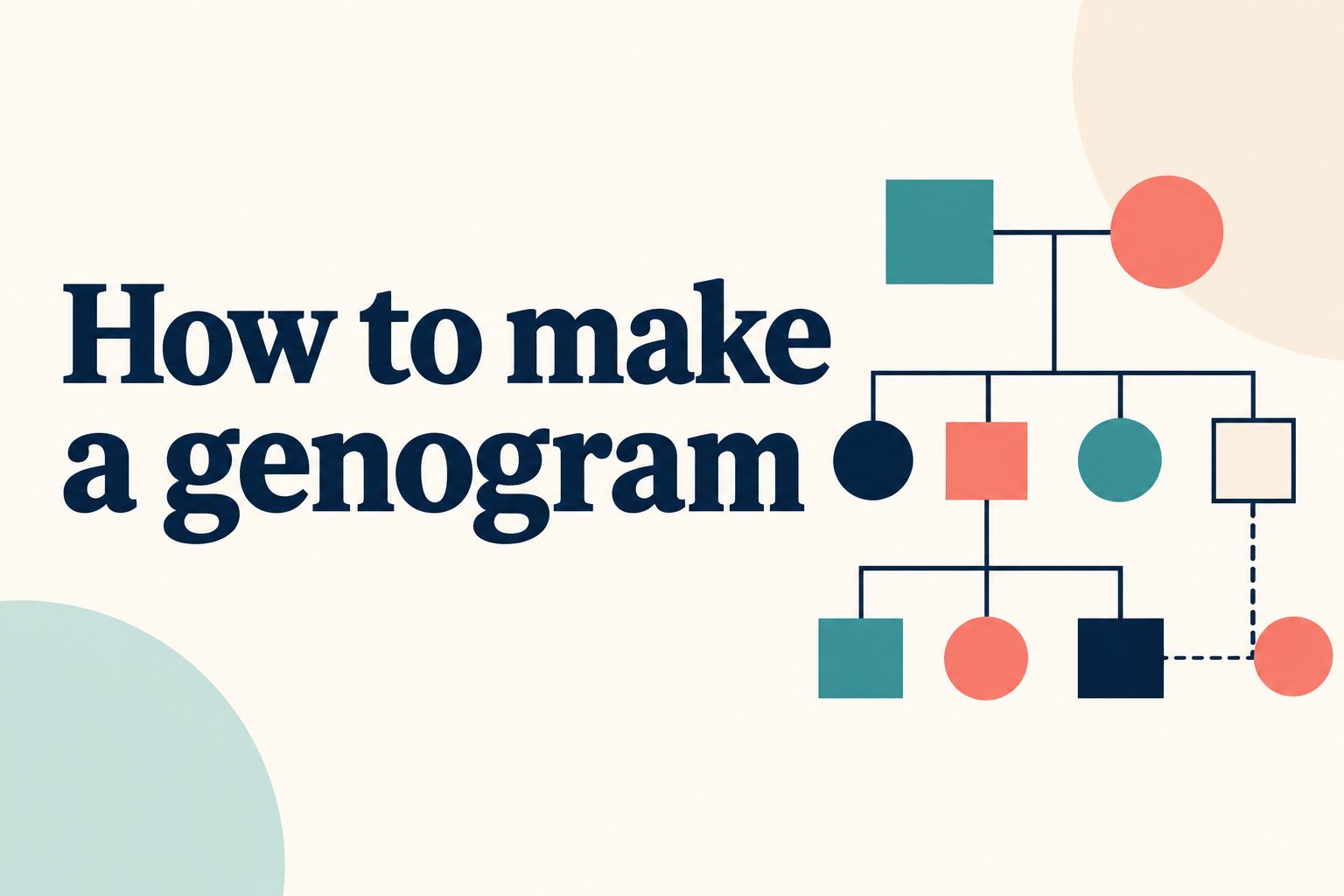
A genogram is a detailed family map that shows more than names and dates. It can reveal relationships, patterns, health history, major life events, and emotional connections across several generations. Learning how to make a genogram can help you explore your family background, prepare for a counseling session, organize medical information, or better understand repeated family dynamics. Unlike a standard family tree, a genogram uses simple symbols and lines to show how people are connected and what those connections may mean. You do not need artistic skills or complex software to create one. With clear goals, accurate information, and respectful handling of private details, you can build a useful picture of your family system.
What A Genogram Shows
A genogram usually includes at least three generations, such as grandparents, parents, children, aunts, uncles, and siblings. It records biological and legal relationships, including marriage, divorce, adoption, separation, and remarriage.
It can also include information that a basic family tree does not show. Examples include medical conditions, addictions, occupations, cultural background, major losses, conflict, estrangement, and especially close relationships.
The purpose is not to judge people or label a family as good or bad. A genogram helps you notice patterns, ask thoughtful questions, and see the broader context behind individual experiences.
Why Making A Genogram Can Be Helpful
A well-made genogram turns scattered family stories into an organized visual record. It can help you identify recurring themes that are difficult to see when information is only discussed in conversation.
For example, you may notice that several relatives developed the same health condition, moved away at a similar age, experienced early bereavement, or struggled with communication after major stress. These patterns do not determine anyone’s future, but they can encourage useful reflection and planning.
Genograms are often used in family therapy, social work, nursing, medicine, education, and genealogy. They can also be a personal project for anyone who wants a clearer view of family history.
1. Clarify Your Reason For Creating It
Start by deciding why you want to make a genogram. Your goal affects the information you collect and the level of detail you include. A medical genogram may focus on diagnoses, age of onset, and causes of death. A counseling genogram may focus more on closeness, conflict, communication, and major family changes.
Write a simple purpose statement before you begin. For example, you may want to explore inherited health risks, prepare for therapy, document family history, or understand how caregiving roles developed. A clear purpose prevents the diagram from becoming overcrowded with unrelated facts.
2. Choose How Many Generations To Include
Three generations are usually enough for a practical genogram. This often includes grandparents, parents and their siblings, and the current generation. If an important pattern began earlier, you may add great-grandparents or another generation.
Do not feel pressured to document every known relative. Include the people who are relevant to your goal, then expand only if their information helps explain a relationship, event, or pattern.
3. Gather Information Carefully
Talk to family members when appropriate, review family records, and use your own memories. Ask open questions rather than making assumptions. You might ask about births, marriages, losses, illnesses, moves, work history, or relationships among relatives.
People can remember events differently, especially sensitive or painful ones. Treat each account as one perspective. If information is uncertain, mark it as unknown or make a note for yourself instead of presenting it as a confirmed fact.
4. Protect Private Details
A genogram can contain highly personal information. Before sharing it, think about whether the people involved would be comfortable with that information being seen by others. This is especially important for health concerns, addiction, trauma, family conflict, adoption, and mental health history.
Use discretion when naming living people or recording information they have not chosen to disclose. If the genogram is for therapy, education, or healthcare, ask what privacy practices apply in that setting.
5. Use Standard Shapes For Family Members
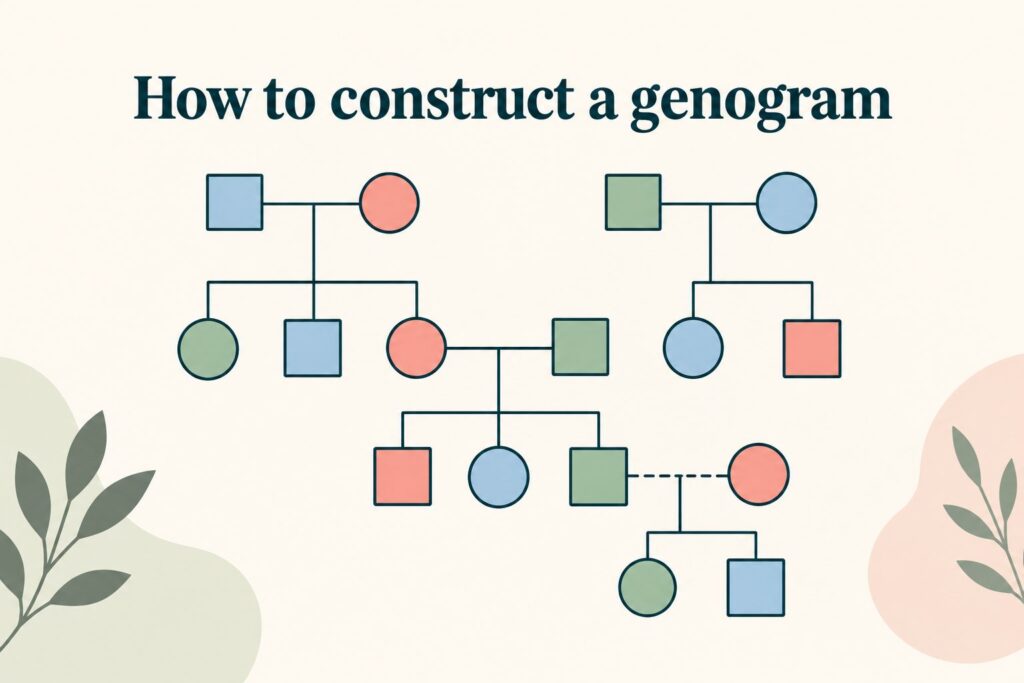
The most common genogram symbols are simple. A square typically represents a male, a circle typically represents a female, and a diamond may represent a person whose gender is unspecified or recorded differently. A horizontal line between two people can show a couple relationship.
Vertical lines connect parents to children. Siblings are placed on the same horizontal level, usually from oldest to youngest, left to right. Consistent symbols make your genogram easier for others to read.
6. Add Dates And Basic Facts
Begin with the facts that create the structure of the diagram. Add names, birth years, death years when relevant, and major relationship dates such as marriage, separation, divorce, or remarriage.
Keep labels brief. A crowded genogram becomes difficult to use, so avoid writing full biographies inside each symbol. You can keep supporting notes separately if you need more detail.
7. Record Significant Life Events
After mapping the basic family structure, add events that may have shaped the family. These can include immigration, military service, job loss, disability, financial hardship, serious illness, early death, caregiving responsibilities, or major moves.
Focus on information that helps explain a meaningful pattern. For example, several family members may have become caregivers at a young age, or multiple generations may have experienced disruption after a major relocation.
How To Make A Genogram Step By Step
Creating a genogram is easier when you build it in layers. Start with the family structure, then add the details that support your purpose.
1. Prepare A Blank Workspace
Use a large sheet of paper, a whiteboard, or a digital diagram tool. Leave enough room around each generation because families often have more connections than expected. Starting with space prevents you from having to redraw the entire chart later.
2. Place The Focus Person First
Put yourself, your client, or the person being studied near the lower middle of the page. This person is often called the focus person. Build upward to parents and grandparents, then outward to siblings, partners, children, and other relevant relatives.
3. Draw The Oldest Generation First
Place the oldest known generation at the top. Draw couples on the same horizontal level and connect them with the appropriate relationship line. Then add their children underneath them, maintaining a clear and consistent layout.
4. Add Parents, Siblings, And Partners
Move down one generation at a time. Add the parents of the focus person, then the focus person and siblings. Include significant partners, former partners, step-relatives, and adoptive relationships if they matter to the story you are mapping.
5. Use A Simple Legend
Create a small key that explains your symbols, line styles, and abbreviations. This is particularly useful if you use special marks for illnesses, emotional closeness, conflict, estrangement, or other family patterns.
A legend keeps the diagram readable without requiring long explanations beside every person. It also reduces the risk of forgetting what a particular line or color means later.
6. Add Relationship Dynamics Sparingly
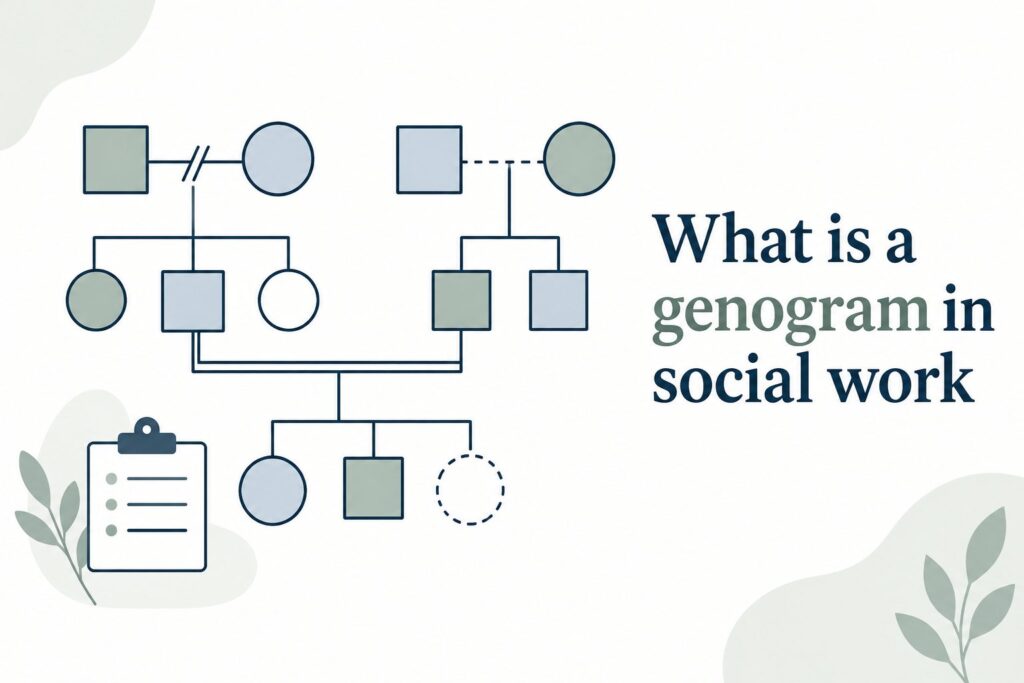
Emotional relationships can be shown with different line styles. For example, a close relationship may use a double line, while a distant or conflict-filled relationship may use a different pattern. The exact style matters less than using it consistently.
Only add these details when they are relevant and supported by reliable information. A relationship can be complex, and no single line can capture every part of it.
7. Review The Diagram For Accuracy
Check names, dates, sibling order, relationship status, and generational placement. Ask yourself whether the chart tells a clear story without becoming cluttered. Correcting the structural information before adding more notes saves time and prevents confusion.
Common Information To Include In A Genogram
A useful genogram is selective. Include details that help answer your central question rather than every fact you discover.
- Basic identity details, such as name, birth year, and death year when applicable.
- Family connections, including biological, adoptive, step, foster, and legal relationships.
- Relationship changes, such as marriages, separations, divorces, and remarriages.
- Major medical history, especially conditions that appear across generations.
- Important emotional or social patterns, including closeness, conflict, estrangement, or caregiving.
- Significant life events, such as migration, bereavement, military service, or major financial changes.
Examples Of Genogram Patterns
1. Repeated Health Conditions
A medical genogram may show that heart disease, diabetes, certain cancers, or mental health conditions appear in multiple relatives. This does not prove that another family member will develop the same condition, but it can help guide conversations with a qualified healthcare professional.
2. Family Caregiving Roles
Some families have a repeated pattern in which one child becomes the main caregiver for parents, siblings, or grandchildren. A genogram can show when this role began and whether it is connected to illness, financial stress, cultural expectations, or family conflict.
3. Relationship Instability
When marriages, separations, divorces, or long-term conflict appear across generations, a genogram can help people explore the surrounding circumstances. The goal is not to blame a family history for current choices, but to understand learned patterns and available alternatives.
4. Migration And Relocation
Families may move repeatedly because of work, safety, marriage, education, or economic need. Mapping these moves can explain why relatives live far apart, why traditions changed, or why certain branches of a family have limited contact.
5. Loss And Grief
Early deaths, miscarriages, stillbirths, estrangements, and other losses can have a lasting effect on family roles and communication. Including these experiences with care can help explain why some topics are difficult for relatives to discuss.
6. Substance Use Patterns
A genogram may identify a history of alcohol misuse, drug use, gambling, or other compulsive behaviors. This information should be handled sensitively and never used to shame anyone. Its value lies in recognizing risk, support needs, and recovery resources.
7. Strong Support Networks
Not every genogram focuses on problems. It can also show loving relationships, supportive grandparents, trusted mentors, stable partnerships, and relatives who helped the family through difficult periods. Identifying strengths is often as valuable as identifying challenges.
Common Mistakes To Avoid
1. Treating A Genogram Like A Simple Family Tree
A family tree mainly records ancestry, while a genogram is designed to show relationships and patterns. If you only add names and dates, you may miss the practical value of the exercise. Include selected context that connects to your goal.
2. Adding Too Much Information At Once
It is easy to overload a genogram with dates, notes, symbols, and stories. A crowded chart becomes difficult to interpret. Start with essential facts, then add only the details that reveal a meaningful pattern or support your original purpose.
3. Making Assumptions About Relationships
Avoid labeling a relationship as hostile, distant, or close based only on rumor or a single disagreement. Family relationships change over time and can look different to each person involved. Use neutral language and acknowledge uncertainty where needed.
4. Ignoring Step And Adoptive Relationships
A genogram should reflect the relationships that shaped people’s lives, not only biological connections. Step-parents, adoptive parents, foster families, guardians, and chosen family members may be central to the family system.
5. Forgetting Positive Family Strengths
If you only record illness, conflict, and loss, the genogram can become discouraging and incomplete. Include supportive relationships, traditions, resilience, shared values, and sources of practical help. These strengths often explain how families cope with difficulties.
6. Sharing Sensitive Information Without Consent
A genogram is not always appropriate to display or distribute widely. Be thoughtful about who can see it, especially when it includes personal health information, trauma history, or family secrets. Remove identifying details when a full name is unnecessary.
Best Practices For A Clear Genogram
1. Keep The Layout Consistent
Place generations in clear horizontal rows and use the same symbols throughout the chart. Consistency makes it easier to follow family connections and spot patterns without stopping to reinterpret the design.
2. Separate Facts From Interpretations
Dates, legal relationships, and medical diagnoses are factual details. Emotional labels and explanations are often interpretations. Keep these categories distinct and be honest about what is known, remembered, or uncertain.
3. Use Neutral Language
Describe sensitive subjects respectfully. Rather than using judgmental labels, use clear and factual terms. This approach keeps the genogram useful for reflection and discussion without causing unnecessary harm or defensiveness.
4. Update It When New Information Appears
Family information can change as people marry, separate, have children, receive diagnoses, reconnect, or share stories that were previously unknown. Treat a genogram as a living document rather than a permanent final record.
5. Discuss It With Care
If you use a genogram in a conversation, focus on curiosity rather than accusation. Ask what patterns mean to the people involved and leave room for different perspectives. A diagram should open a dialogue, not end one.
6. Ask For Professional Support When Needed
A genogram can bring up grief, trauma, conflict, or difficult questions. If the process becomes emotionally overwhelming, consider discussing it with a counselor, therapist, social worker, or healthcare professional who can offer appropriate support.
Frequently Asked Questions
1. How Many Generations Should A Genogram Include?
Most genograms include three generations because that is often enough to identify meaningful family patterns. You can include more generations if the information is available and relevant. The best length depends on your purpose, the complexity of the family, and how clearly the chart remains readable.
2. Can I Make A Genogram If I Do Not Know Much About My Family?
Yes. Begin with what you know and mark missing information as unknown. You can speak with relatives, review records, or add details later. An incomplete genogram can still be useful because it shows both the known family structure and the questions that remain.
3. What Is The Difference Between A Genogram And A Family Tree?
A family tree primarily shows ancestry and descent. A genogram includes those connections but adds information about relationships, health, emotional patterns, and important life events. It is designed to help people see how a family system may influence experiences over time.
4. Do I Need Special Software To Create A Genogram?
No. You can make a genogram with paper and pencil, a presentation program, a spreadsheet, or a dedicated diagram tool. Software can improve neatness and make updates easier, but the quality of the genogram depends more on accurate, relevant information than the tool you use.
5. Should I Include Sensitive Family Information?
Only include sensitive information when it is relevant to your purpose and you can handle it responsibly. Protect privacy, avoid sharing the document casually, and use respectful wording. If the genogram is for professional care, ask how confidentiality and record handling will be managed.
6. Can A Genogram Predict My Future?
No. A genogram can highlight family patterns and possible areas to explore, but it cannot predict outcomes. Family history is only one influence among many. Personal choices, support systems, environment, healthcare, and changing circumstances also shape a person’s life.
Conclusion
Learning how to make a genogram starts with a clear purpose, a simple family structure, and careful collection of information. Build the diagram one generation at a time, use consistent symbols, and add only the details that help reveal meaningful family connections or recurring patterns.
The most useful genogram is accurate, respectful, and easy to read. Whether you create one for personal reflection, health planning, family history, or counseling, approach it with curiosity and compassion. The result can offer a clearer view of where a family has been and the strengths it carries forward.
Discussion