
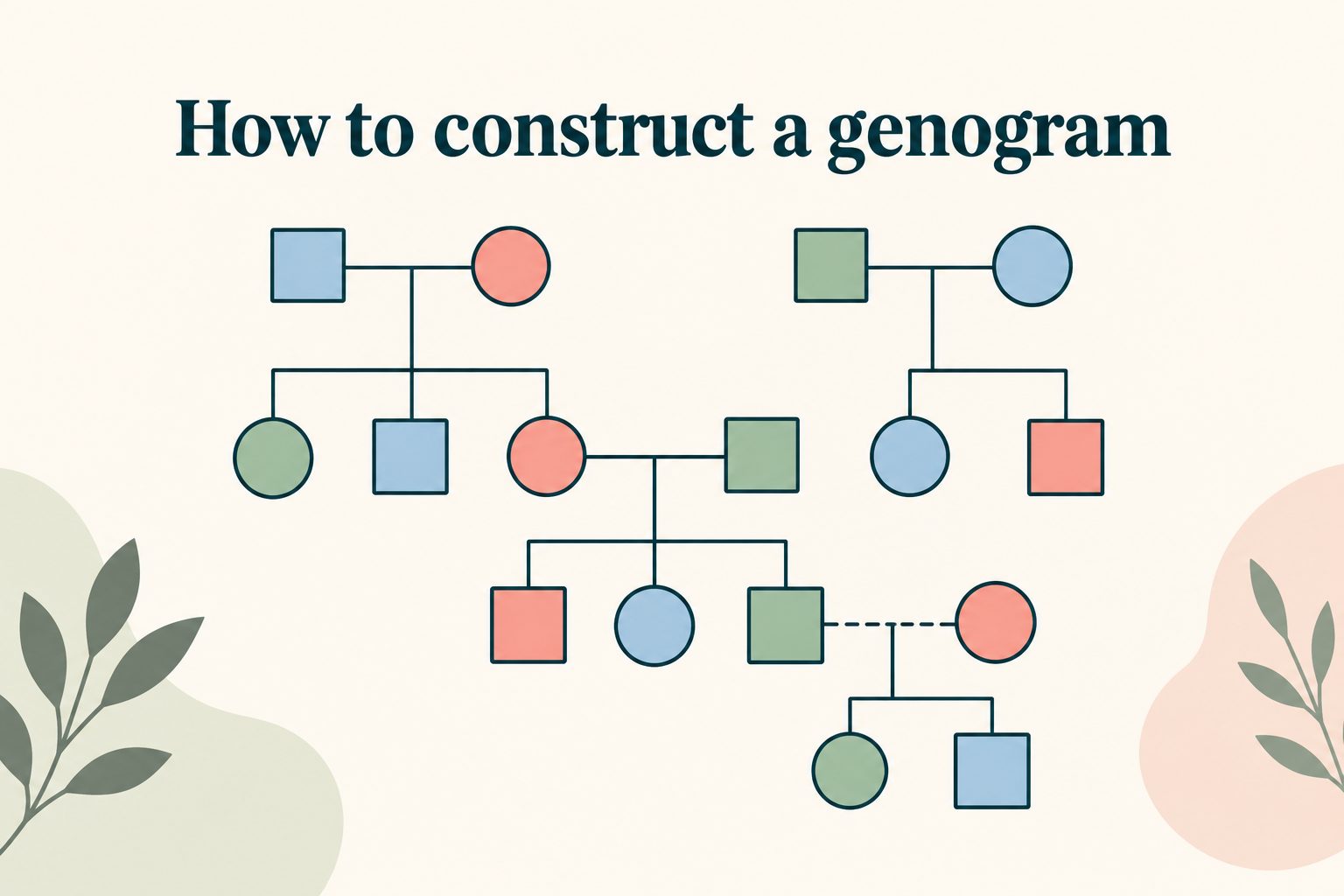
A genogram is more than a family tree. It is a visual map that shows family relationships, important life events, health patterns, and emotional connections across generations. Learning how to construct a genogram can help you see recurring themes that are difficult to notice in ordinary conversations or written notes. It may reveal patterns involving caregiving, conflict, addiction, illness, divorce, loss, or close support. Genograms are often used in counseling, healthcare, social work, education, and personal family research. You do not need to be an expert artist to make one. With clear information, consistent symbols, and respectful questions, you can create a useful picture of a family system. This guide explains what a genogram includes, why it matters, how to build one step by step, and how to handle sensitive details responsibly.
What A Genogram Shows
A standard family tree usually records names, dates, and biological relationships. A genogram adds layers of information that help explain how a family functions over time.
1. Family Structure
A genogram typically includes at least three generations, such as grandparents, parents, siblings, children, and grandchildren. It can show marriages, partnerships, separations, divorces, adoptions, stepfamily relationships, and pregnancies. This structure creates the foundation for every other detail you add.
2. Demographic Details
Basic details often include each person’s name, age or birth year, death year when relevant, cultural background, occupation, and major life events. You do not need to add every fact you know. Include details that support the reason you are creating the genogram.
3. Health History
Health information can make a genogram especially valuable in medical or counseling settings. You might record chronic conditions, major diagnoses, disabilities, causes of death, mental health concerns, or substance use patterns. Use careful wording and only include information you have a reasonable basis to record.
4. Emotional Relationships
Genograms can show whether relationships are close, distant, conflict-filled, cut off, controlling, or supportive. These patterns are usually represented with different line styles. Emotional information can help explain why a family responds to stress, illness, parenting, or change in certain ways.
5. Repeated Family Patterns
Looking across generations may reveal repeated experiences, such as early parenthood, unstable relationships, estrangement, caregiving roles, military service, migration, or a specific health condition. A genogram does not prove that one generation causes another to behave the same way, but it can help identify questions worth exploring.
6. Major Events And Transitions
Deaths, relocations, job loss, immigration, accidents, incarceration, marriage, divorce, and serious illness can shape family relationships. Adding major events gives context to the lines and symbols. It also helps you avoid treating family patterns as isolated choices without considering the pressures people faced.
Why Construct A Genogram
A well-made genogram turns scattered family information into a clearer picture. It can be useful whether you are working with a professional or exploring your own family history.
1. It Creates A Broader Perspective
People often view family challenges through one recent event or one difficult relationship. A genogram encourages you to look at a wider timeline. This broader perspective can show how grief, conflict, caregiving, or health concerns developed over several generations.
2. It Supports Better Conversations
A genogram can help families ask more thoughtful questions. Instead of assuming why someone acted a certain way, you can discuss what was happening in the family at that time. This approach may make conversations less blaming and more curious.
3. It Helps Identify Health Risks
When several relatives have similar illnesses, a genogram can make the pattern easier to discuss with a healthcare professional. It does not replace medical advice or genetic testing, but it can help organize information before an appointment.
4. It Clarifies Family Roles
Families often develop informal roles, such as caretaker, peacemaker, problem solver, outsider, or high achiever. These roles may shift over time, but a genogram can help show where they began and how they influence present relationships.
5. It Helps Professionals Plan Support
Counselors, nurses, social workers, and educators may use genograms to understand a person’s support network and stressors. The visual format can help professionals ask relevant questions while avoiding narrow assumptions about family life.
6. It Preserves Family Knowledge
Older relatives may hold stories that are not written down anywhere else. Constructing a genogram creates an opportunity to record names, connections, migrations, traditions, and important events before that knowledge is lost.
Materials You Need For A Genogram
You can make a genogram on paper, a whiteboard, or a digital diagram tool. The method matters less than keeping your information organized and confidential.
1. A Clear Purpose
Before collecting information, decide why you are making the genogram. Your purpose may be to explore family relationships, prepare for counseling, document health history, or understand a recurring issue. A clear purpose prevents the diagram from becoming crowded with unrelated details.
2. A Basic Symbol Key
Use a simple key so anyone reading the genogram can recognize what each shape and line means. Common conventions use a square for a male and a circle for a female, but you should use symbols respectfully and adapt them when necessary to reflect a person’s identity.
3. Reliable Family Information
Gather names, approximate dates, relationship details, and major events from family members, documents, or your own notes. Mark uncertain facts as unconfirmed rather than presenting them as certain. Accuracy matters, especially when the genogram may inform care or family discussions.
4. Space For Notes
Some information does not fit neatly inside a symbol. Keep separate notes for stories, sources, uncertainty, dates, and questions to revisit. This prevents the diagram from becoming difficult to read while preserving useful context.
5. Privacy Boundaries
A genogram may contain sensitive personal information. Decide who can see it, where it will be stored, and which details should remain private. If you are creating one for a group setting, obtain consent before sharing personal family information.
6. A Flexible Mindset
Family structures are diverse and sometimes complicated. Avoid forcing people into categories that do not fit their lives. The goal is to represent relationships clearly and respectfully, not to create a perfect or judgmental picture of a family.
How To Construct A Genogram Step By Step
The process is easier when you begin with basic relationships and add details gradually. Start simple, then review the diagram for patterns.
1. Begin With Yourself Or The Focus Person
Place the person whose family system is being explored near the center or lower middle of the page. This person is sometimes called the identified person or focus person. Add their basic details first, then build outward to parents, siblings, partners, and children.
2. Add Parents And Siblings
Place parents above the focus person and connect them with the appropriate relationship line. Put siblings on the same generational level. Keep birth order visible from left to right when possible, because order can provide useful context in family roles and expectations.
3. Add Grandparents And Earlier Generations
Add grandparents above each parent, then continue farther back if relevant information is available. Three generations are often enough for a practical genogram, but additional generations can be useful when examining a long-term health condition, migration history, or repeated relationship pattern.
4. Include Partners And Children
Add current and former partners, marriages, separations, divorces, and children. Clearly distinguish biological, adopted, foster, step, and guardian relationships when those differences matter to your purpose. Do not assume that biological connection always reflects emotional closeness or caregiving history.
5. Record Important Facts
Add dates, diagnoses, occupations, major losses, or other details that directly support your goal. For example, a genogram focused on health may include diseases and causes of death, while one used in therapy may emphasize emotional bonds, trauma, and support systems.
6. Draw Emotional Relationship Lines
Use your symbol key to add close, distant, conflictual, cut-off, or abusive relationships only when appropriate. These lines should reflect the best available understanding, not permanent labels. Relationships can change, and different family members may experience the same relationship differently.
7. Review For Missing Information
Look for unknown dates, unclear parentage, unnamed partners, or missing branches of the family. Do not guess to fill a gap. A question mark, note, or blank space is more honest and more useful than an unsupported conclusion.
8. Look For Patterns Carefully
After the structure is complete, study the diagram for repeated themes. Notice patterns without rushing to explain them. Ask whether the same issue appears in several generations, whether a major event changed family roles, or whether support tends to come from particular relatives.
Common Genogram Symbols And Lines
Although symbol systems vary, consistency is more important than using one rigid format. Create a small legend before sharing the genogram.
A square often represents a male family member, while a circle often represents a female family member. A symbol can be adapted or labeled to respect people whose identities are not represented by those traditional categories. Names and dates are commonly placed inside or near the symbol.
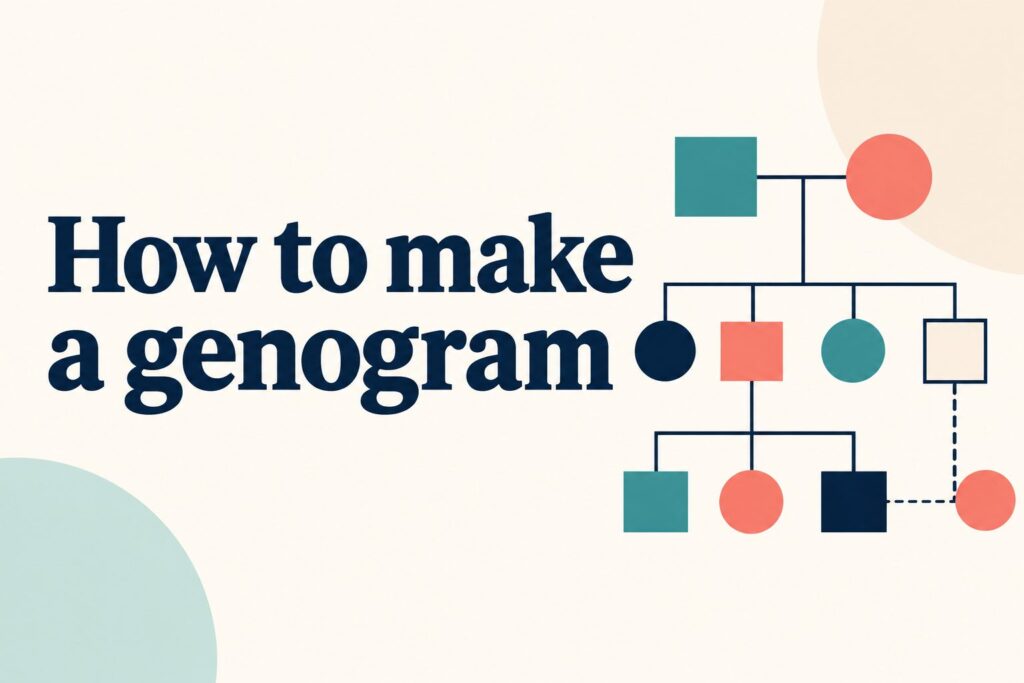
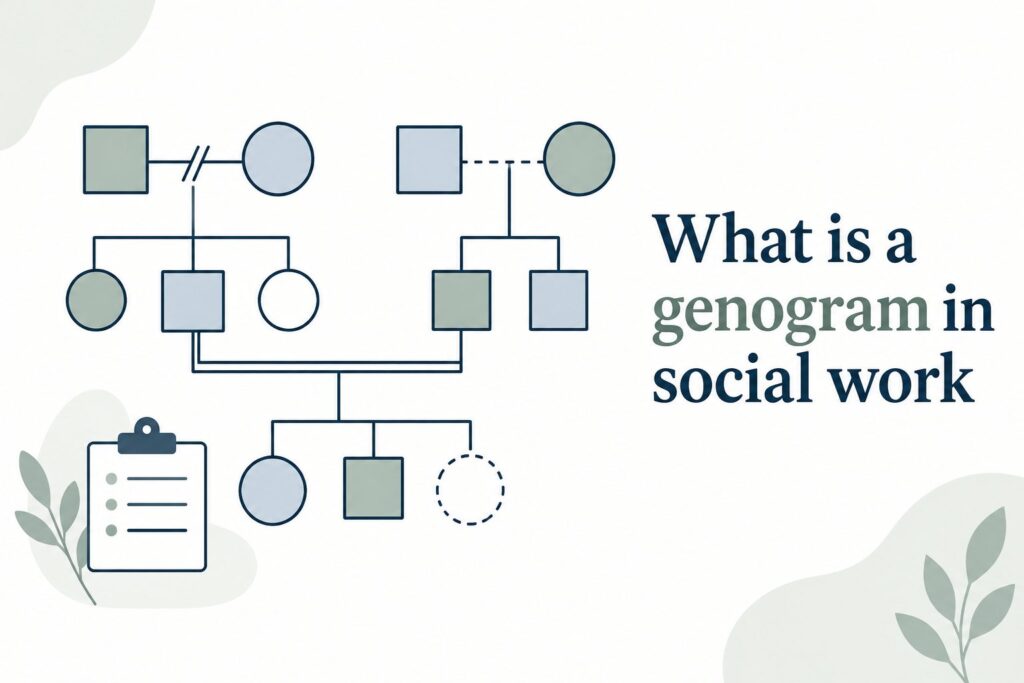
A horizontal line between two people usually shows a couple relationship. A vertical line below that relationship may connect to children. Separation and divorce are often shown by marks through the relationship line, while multiple partnerships can be shown with separate connecting lines.
Emotional lines may use different styles to represent closeness, distance, conflict, hostility, or cutoff. Because these labels can feel personal, include them only when they are necessary and use careful, nonjudgmental language in your notes.
Health information may be written next to a person’s symbol. Keep the text short enough to remain readable. For complex medical histories, use a numbered note system rather than crowding the diagram with long explanations.
A shaded or marked symbol may indicate a particular condition, but only if your key explains it. Use visual marks consistently. If a person has more than one relevant condition, a separate note may be clearer than multiple overlapping symbols.
Examples Of Genogram Information
Examples help show how a genogram can move beyond names and dates without becoming overly detailed.
1. A Health History Genogram
A person preparing for a medical appointment may map parents, grandparents, aunts, uncles, and siblings. Next to each relative, they record significant diagnoses, approximate age at diagnosis, and cause of death when known. The result helps identify questions for a healthcare professional.
2. A Family Conflict Genogram
In counseling, a client may map close, distant, and conflictual relationships across three generations. The genogram might show that several relatives stopped speaking after major disagreements. The purpose is not to assign blame but to explore how conflict is handled in the family.
3. A Blended Family Genogram
A blended family genogram can show biological parents, stepparents, half-siblings, step-siblings, and caregiving relationships. It can be especially useful when a child moves between households or has several adults who play important roles in daily life.
4. A Migration History Genogram
A family history project may include countries or regions of origin, migration years, languages spoken, and major transitions. This can show how displacement, opportunity, discrimination, or cultural change influenced family choices and relationships across generations.
5. A Caregiving Genogram
When an older adult needs support, a genogram can identify relatives who provide transportation, finances, medical advocacy, or daily care. It may also show conflict or burnout risks. This makes it easier to discuss responsibilities realistically.
6. A School Support Genogram
With appropriate consent, a school professional may use a simplified genogram to understand a student’s household structure and support system. The diagram can help avoid assumptions about who has legal authority, who provides care, and which adults the student trusts.
Common Mistakes To Avoid
A genogram is most helpful when it is clear, accurate, and respectful. These common mistakes can reduce its value.
1. Trying To Record Everything
Including every story, diagnosis, and family disagreement can make the chart unreadable. Focus on information connected to your purpose. Keep additional history in separate notes so the main diagram remains useful at a glance.
2. Treating Assumptions As Facts
Family stories can be incomplete, biased, or misunderstood. Record uncertainty honestly. If information comes from one person, note that it is their account. Avoid turning rumors or unverified beliefs into permanent labels on a family record.
3. Using Judgmental Language
Words such as difficult, bad parent, lazy, or unstable do not explain a family pattern and may cause harm. Use specific, neutral descriptions instead. For example, record “limited contact since 2018” rather than making a broad statement about a person’s character.
4. Ignoring Nontraditional Relationships
Families may include chosen relatives, foster parents, guardians, co-parents, same-gender partners, and other meaningful connections. A genogram should reflect the people who matter in someone’s life, not only conventional biological relationships.
5. Overinterpreting Patterns
A repeated pattern is a starting point for discussion, not a diagnosis or prediction. Several divorces, illnesses, or estrangements do not prove that the same outcome will happen again. Consider social conditions, individual choices, and missing information.
6. Forgetting Privacy
A genogram can expose deeply personal details. Do not leave it in a shared space, send it casually, or discuss another person’s information without care. Protecting privacy is especially important when children, health conditions, trauma, or family conflict are involved.
Best Practices For A Useful Genogram
A thoughtful approach makes the genogram more accurate and easier to use.
1. Ask Open Questions
Use questions that invite stories rather than demand explanations. Ask what changed after a move, who provided support during a crisis, or how relatives stayed connected. Open questions reduce defensiveness and often produce richer, more balanced information.
2. Date Important Events
Dates help connect family events to larger patterns. A death, job loss, relocation, or divorce may explain why roles changed. Even approximate years are useful, especially when exact records are unavailable.
3. Use A Consistent Legend
Decide what each line, mark, and abbreviation means before adding detail. A consistent key prevents confusion when you revisit the genogram later or share it with a professional who was not involved in creating it.
4. Separate Facts From Interpretations
Write factual information directly on the chart and keep interpretations in notes. “Moved in 2012” is a fact; “moved because of family conflict” may be an interpretation unless the person has confirmed it. This distinction improves fairness and accuracy.
5. Update The Diagram Over Time
Families change through births, deaths, marriages, separations, recoveries, and new relationships. Treat the genogram as a working document rather than a final verdict. Updating it can reveal changes in support, contact, and family roles.
6. Invite Corrections When Appropriate
If the genogram will be used with family members, invite them to correct missing or inaccurate information. Different people may remember events differently. Listening to those differences can be as informative as the chart itself.
7. Use Professional Support For Sensitive Topics
If the genogram brings up trauma, abuse, grief, or serious health concerns, consider working with a qualified counselor, social worker, or healthcare professional. They can help interpret the information safely and keep the discussion focused on support.
Frequently Asked Questions
1. How Many Generations Should A Genogram Include
Most genograms include three generations because that is often enough to show patterns involving relationships, health, and major life events. You can include more generations when information is available and relevant, but a larger chart should still remain clear and connected to your purpose.
2. Is A Genogram The Same As A Family Tree
No. A family tree mainly shows ancestry and biological or legal relationships. A genogram includes those relationships but also adds information about health, emotional connections, major events, behavior patterns, and family roles. It is designed to show how a family system may function over time.
3. Can I Make A Genogram Without Talking To Relatives
Yes, you can begin with information you already know, public records, or personal documents. However, you may have gaps or incomplete perspectives. Mark uncertain information clearly and avoid making strong conclusions until you can verify details or discuss them with trusted relatives.
4. What Should I Do If Family Information Is Sensitive
Decide in advance what needs to be included and who will see the genogram. Use neutral wording, protect private records, and avoid sharing someone else’s health or personal history without permission. If the topic involves trauma or conflict, professional guidance can be helpful.
5. Do I Need Special Software To Create A Genogram
No. You can draw a genogram by hand using paper and a clear symbol key. Digital tools can make updates easier, but the most important parts are accurate information, logical organization, and a consistent way of showing relationships and patterns.
6. Can A Genogram Predict My Future
A genogram cannot predict your future. It can highlight patterns, risks, and family influences that may be useful to explore. Your choices, support systems, environment, and circumstances all matter. Use the chart as a source of insight and questions, not as a fixed forecast.
Conclusion
Learning how to construct a genogram begins with mapping family structure and then adding only the details that serve your purpose. By recording relationships, health history, major events, and emotional connections, you can create a clearer view of the patterns that shape family life.
The most useful genograms are accurate, respectful, and open to revision. Keep privacy in mind, separate facts from assumptions, and treat patterns as invitations to learn rather than judgments about anyone in the family.
Discussion